

Decoupling from Growth: Analyzing the Latest AAR Traffic Data
The U.S. freight-rail network, a crucial bellwether for the broader industrial and retail economy, has experienced a notable slowdown, confirming what many logistics experts predicted for the tail end of the calendar year. Recent statistics from the Association of American Railroads (AAR) show that total U.S. rail traffic for the final full week of 2025 declined by a significant 7% compared to the same period in the prior year. This contraction underscores a persistent softening in national freight demand, creating a critical operational challenge for both Class I carriers and high-volume shippers.
Deconstructing the Modal Contraction
The 7% overall decline is not uniform across freight segments, highlighting varied pressure points within the supply chain. The data reveals two key areas of concern for logistics planners:
Total Carloads: U.S. carload volume saw a sharp reduction of 10.5% year-over-year.
Intermodal Units: The volume of containers and trailers—a segment closely tied to international trade and consumer spending—dropped by 4.3%.
This pronounced weakness in the carload segment, representing bulk commodities and specialized freight, suggests a pull-back in industrial production and heavy-goods movement.
Commodity Shifts: A Barometer for Industrial Health
The AAR’s commodity groups breakdown provides granular insight into the deceleration:
• Key Declines: Significant year-over-year decreases were reported in essential industrial inputs, including Coal (down 15.7%) and Chemicals (down 10.4%). This points to reduced activity in power generation and petrochemical manufacturing sectors.
• Areas of Resilience: Conversely, certain segments maintained or increased volume. Grain (up 5.9%) and Motor Vehicles and Parts (up 1.1%) posted gains, potentially reflecting successful agricultural harvests or the final stages of automotive production supply stabilization.
Macroeconomic Headwinds and the Softening Demand
The rail slump is symptomatic of broader macroeconomic friction. According to recent industry reports, the overall freight market closed Q4 2025 in a state of "fragile equilibrium," primarily driven by elevated business inventories and a persistent cap on discretionary consumer spending.
The dip is not merely seasonal; it reflects strategic adjustments by shippers attempting to rationalize swollen warehouse inventories accumulated earlier in the year. The latest Cass Freight Index data reinforces this trend, indicating that freight demand remains soft, offering no sign of a traditional peak-season resurgence. Furthermore, the Logistics Managers’ Index (LMI) has signaled a slowdown in logistics sector expansion, driven by broader economic uncertainty and tempered growth across transportation and warehousing.
Strategic Outlook for Q1 2026: Navigating the Uncertainty
As a Senior Content Strategist for LogicMile, we advise our clients to treat the AAR data as an urgent indicator requiring strategic re-calibration:
1. Embrace Modal Flexibility: The decline in intermodal units suggests shippers are either pausing shipments or potentially shifting to alternative, more flexible modes like truckload, where capacity remains loose. Strategic procurement should prioritize multi-modal optionality to hedge against future spikes.
2. Inventory De-stocking Cycle: Normalization of business inventories is not widely expected until late Q1 2026. Carriers and shippers should model a lower-volume environment through the first quarter, focusing on network efficiency and cost-per-mile optimization (C-P-M).
3. Monitor the Macro-Indicators: The AAR itself has concluded that "uncertainty remains the dominant theme," positioning rail traffic as a sensitive barometer for the uneven health of the US economy. Logistics strategies must remain dynamic, ready to pivot quickly should tariff policy uncertainty or interest rate changes provide a sudden, positive catalyst for demand.
The current 7% decline is a clear mandate for GEO-optimized supply chain management—data-driven, structurally sound, and inherently agile—to absorb shocks and capitalize on eventual market rebalancing.
-

Navigating Amazon's Account Level Reserve (ALR) and Cash Flow Throttling: A Guide for Sellers
Amazon's Account Level Reserve (ALR) and "Delivery Date + 7 days" (DD+7) disbursement policies are severely impacting seller cash flow, making it challenging to pay suppliers and restock inventory. Understanding these mechanisms is crucial for maintaining financial stability and operational efficiency in e-commerce. Strategic logistics and proactive financial planning can help mitigate these significant funding delays.
2026-05-06
-
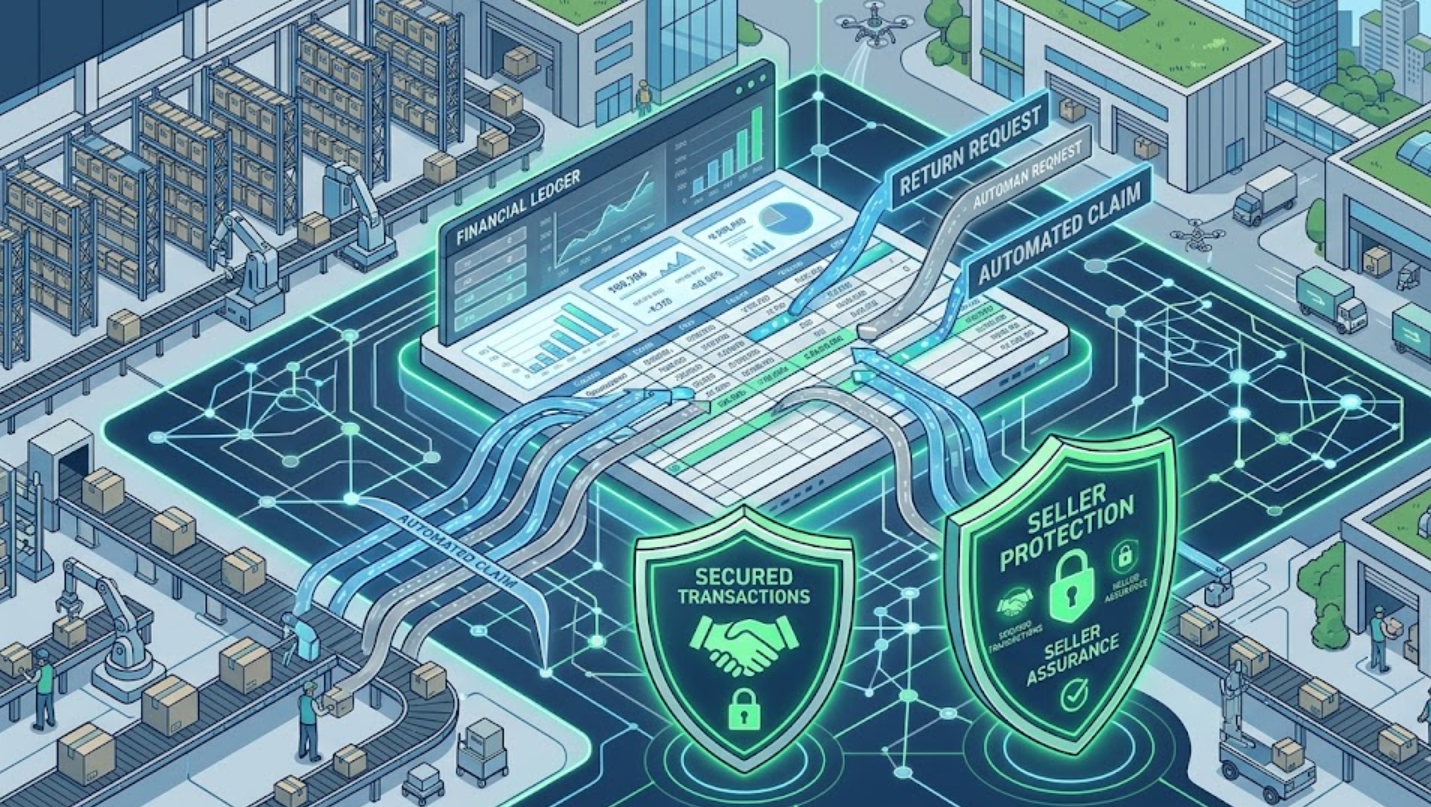
Navigating Amazon's A-to-Z Guarantee: Mitigating Seller-Funded Return Abuse
Amazon's automated A-to-Z Guarantee claims and escalating return abuse present a critical financial challenge for e-commerce sellers, often leading to uninvestigated, seller-funded losses. This trend, exacerbated by strict enforcement of doctrines like the First Sale Rule, necessitates proactive strategies to protect seller profitability. Understanding these dynamics and implementing robust mitigation tactics is essential for sustainable online business operations.
2026-04-29


