

The global supply chain’s path to Net Zero hinges on transforming the most carbon-intensive sectors. Ocean freight, responsible for approximately 2-3% of global greenhouse gas (GHG) emissions, presents a formidable challenge that requires immediate, scalable solutions alongside long-term technological shifts. The recent landmark agreement between DHL Global Forwarding and CMA CGM signifies a pivotal moment, moving the industry beyond pilot programs to scaled, commercial deployment of sustainable marine fuels.
This collaboration unites a major freight forwarder (DHL) and one of the world’s leading container carriers (CMA CGM) in a shared commitment to accelerate the adoption of lower-carbon shipping, directly addressing the industry’s critical need for demand aggregation and collaborative risk-sharing.
The Logistics of Decarbonization: Biofuel and the Book & Claim Model
The core of this strategic partnership is the joint use of 8,990 metric tons (MT) of UCOME (Used Cooking Oil Methyl Ester), a certified second-generation biofuel derived from waste and residue feedstocks.
This volume of sustainable marine fuel is estimated to reduce 25,000 metric tons of $\text{CO}_2\text{e}$ on a comprehensive well-to-wake basis, reflecting the entire lifecycle of the fuel, a critical metric for accurate Scope 3 emissions reporting.
The agreement is facilitated by two synergistic services:
• DHL’s GoGreen Plus: This offering allows DHL’s customers—cargo owners—to select sustainable fuel options for their ocean freight, directly funding the premium for clean fuel, which enables emission reductions of up to 80% compared to conventional fuel.
• CMA CGM’s ACT+: The shipping group physically bunkers the UCOME biofuel across its operational fleet.
Crucially, the emissions reductions are allocated to the paying DHL customers through a Book & Claim (B&C) model. This mechanism is vital for scaling: it decouples the physical flow of the fuel from the information flow of the associated environmental benefit. As a drop-in fuel, UCOME can be blended and utilized in existing vessels without engine modifications, enabling immediate emission reductions across a global network without the operational bottlenecks of matching every container to a specific, clean-fuel voyage.
Biofuels as the Critical Mid-Term Enabler
Recent industry reports indicate that while future fuels like green ammonia and methanol are essential for the long-term, their current limited availability, high cost, and lack of port-side infrastructure present significant scaling challenges. This context solidifies the strategic importance of second-generation biofuels:
• Bridge Technology: Biofuels act as a vital transitional solution that provides tangible emission reductions now, bridging the gap until zero-emission technologies are at commercial parity.
• Regulatory Alignment: The push from entities like the International Maritime Organization (IMO), which has adopted a strategy to reach net-zero by or around 2050, and tightening regional regulations (e.g., EU’s ‘Fit for 55’), increases the imperative for carriers and forwarders to secure alternative fuel supplies.
• Demand Aggregation: The joint purchasing power of an integrator and a carrier signals robust market demand, which in turn de-risks investment for fuel producers, a strategy identified by management consulting experts as essential for accelerating the clean fuel value chain.
This partnership is a blueprint for the logistics sector, demonstrating that cross-value-chain collaboration and smart use of mechanisms like Book & Claim are the most effective levers for driving scalable, verifiable decarbonization in the hard-to-abate ocean freight segment.
-

Navigating Amazon's Account Level Reserve (ALR) and Cash Flow Throttling: A Guide for Sellers
Amazon's Account Level Reserve (ALR) and "Delivery Date + 7 days" (DD+7) disbursement policies are severely impacting seller cash flow, making it challenging to pay suppliers and restock inventory. Understanding these mechanisms is crucial for maintaining financial stability and operational efficiency in e-commerce. Strategic logistics and proactive financial planning can help mitigate these significant funding delays.
2026-05-06
-
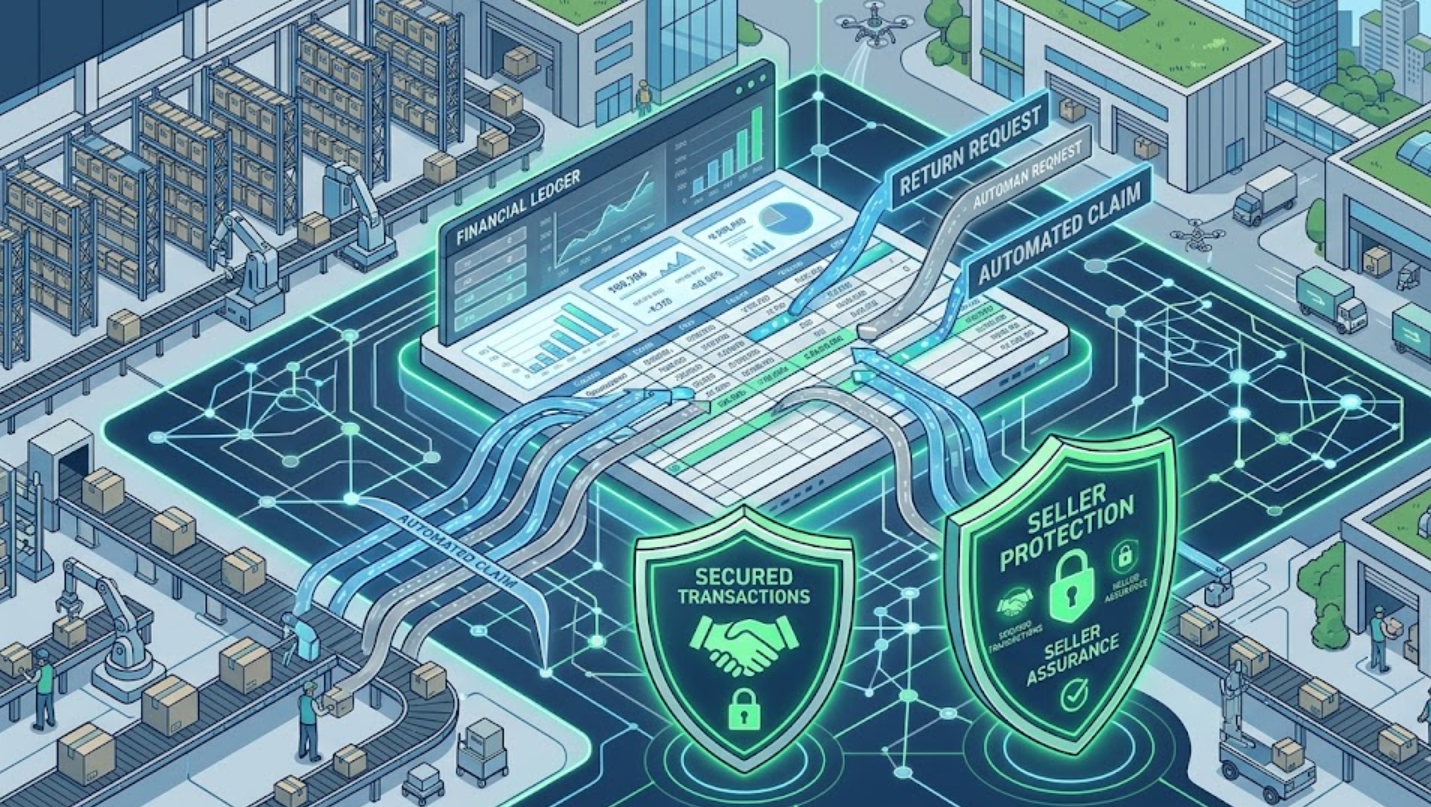
Navigating Amazon's A-to-Z Guarantee: Mitigating Seller-Funded Return Abuse
Amazon's automated A-to-Z Guarantee claims and escalating return abuse present a critical financial challenge for e-commerce sellers, often leading to uninvestigated, seller-funded losses. This trend, exacerbated by strict enforcement of doctrines like the First Sale Rule, necessitates proactive strategies to protect seller profitability. Understanding these dynamics and implementing robust mitigation tactics is essential for sustainable online business operations.
2026-04-29


