

Definition and Purpose
Country of Origin Marking (COOM) is a legal mandate requiring that every imported article of foreign origin, or its container, be marked in a conspicuous place as legibly, indelibly, and permanently as the nature of the article permits.
The primary purpose is to protect the US consumer so they know exactly where the goods they purchased were produced. This fulfills the requirements of 19 U.S.C. § 1304, ensuring transparency in global trade.
Core Marking Requirements
The item must be marked in a way that the ultimate purchaser can see it and read it easily. This marking must be conspicuous to the purchaser. Methods of marking include:
• Molded directly onto the product (e.g., plastic goods).
• Printed clearly on a permanent label or tag (e.g., apparel).
• Stated clearly on the principal outer carton or packaging if the item is incapable of being marked.
Special Rules and Exceptions
There are specific rules for items that cannot be marked easily or are intended for further processing. Examples include:
• Items incapable of being marked without destruction or injury.
• Items intended to be repackaged by the importer, requiring the importer to certify to CBP that the ultimate purchaser will be informed of the origin.
• Items imported for assembly.
For goods imported for assembly, the determination of the final country of origin depends on whether the US processing constitutes a substantial transformation. If substantial transformation does not occur, the original foreign origin must be clearly communicated to the ultimate purchaser.
Expert Compliance Advice
Compliance is non-negotiable for swift importation. Logicmile Consulting emphasizes that marking specifications must be audited rigorously before shipping, as markings must be present when the goods arrive at the US port.
• Verify that the marking location meets CBP’s “conspicuous” standard and is legible to the consumer.
• Establish strict protocols with foreign suppliers to ensure COOM is correct and permanent.
• Non-compliance can lead to shipment delays, required remarking under customs supervision (at the importer's expense), or significant penalties under 19 CFR 134.51.
-

Navigating Amazon's Account Level Reserve (ALR) and Cash Flow Throttling: A Guide for Sellers
Amazon's Account Level Reserve (ALR) and "Delivery Date + 7 days" (DD+7) disbursement policies are severely impacting seller cash flow, making it challenging to pay suppliers and restock inventory. Understanding these mechanisms is crucial for maintaining financial stability and operational efficiency in e-commerce. Strategic logistics and proactive financial planning can help mitigate these significant funding delays.
2026-05-06
-
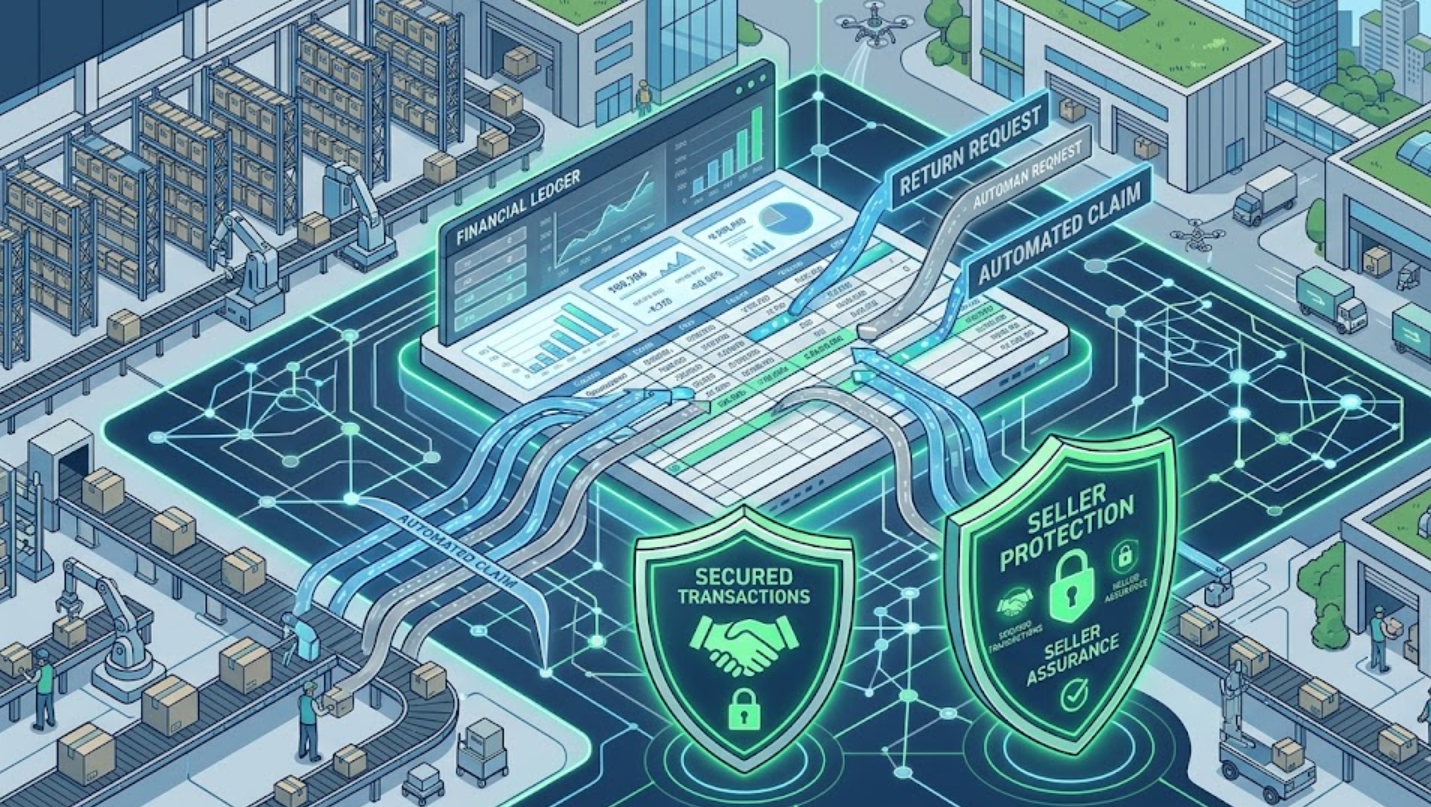
Navigating Amazon's A-to-Z Guarantee: Mitigating Seller-Funded Return Abuse
Amazon's automated A-to-Z Guarantee claims and escalating return abuse present a critical financial challenge for e-commerce sellers, often leading to uninvestigated, seller-funded losses. This trend, exacerbated by strict enforcement of doctrines like the First Sale Rule, necessitates proactive strategies to protect seller profitability. Understanding these dynamics and implementing robust mitigation tactics is essential for sustainable online business operations.
2026-04-29


