

THE DEPRECIATION OF LINEAR PLANNING
For the better part of the last century, logistics planning was dominated by Euclidian geometry: the shortest line between two points. In a low-volatility environment, this logic holds. However, global supply chains no longer operate in a vacuum. They operate in a high-friction environment where a 5% saving in mileage can result in a 20% increase in dwell time due to port inefficiencies or customs bottlenecks.
We have observed that traditional ERP systems are often hard-coded to favor these linear paths. They optimize for a theoretical reality that does not exist on the water or the tarmac. When we audit these systems, we frequently find that "shortest path" logic is responsible for significant capital stagnation. Inventory trapped in a shorter but congested route is inventory that cannot be liquidated. Therefore, the cost of capital must be factored into the routing algorithm. We calculate that for high-value goods, adding 400 miles to a route to save 48 hours of transit time yields a positive ROI when inventory holding costs are factored into the equation.
QUANTIFYING THE CHAOS TAX
Volatility creates a "Chaos Tax" on every shipment that relies on static assumptions. This tax manifests as expedited freight charges, detention and demurrage fees, and lost sales due to stockouts. Most organizations treat these as "unavoidable operational costs." We reject this categorization. These are variables that can be dampened through predictive modeling.
By analyzing historical variance and real-time indicators—such as terminal handling speeds and weather patterns—we can assign a risk probability score to every potential route. A route with a low base cost but a high variance score is often more expensive in the long run than a route with a slightly higher premium but near-zero variance. The Chaos Tax is voluntary. It is paid by those who refuse to quantify risk. We provide the framework to make that quantification visible, allowing decision-makers to purchase certainty rather than just capacity.
THE ALGORITHMIC INTERVENTION
The solution is not to hire more dispatchers; it is to implement better math. Computational Logistics transforms the supply chain into a dynamic graph problem. We utilize algorithms that continuously re-evaluate the optimal path based on a weighted index of cost, speed, and reliability. This is not a one-time calculation at the moment of booking; it is a continuous assessment.
If a disruption occurs at a transshipment hub, the algorithm should immediately flag the deviation and propose an alternative execution strategy. This level of responsiveness is impossible with spreadsheets and email chains. It requires a data infrastructure that treats logistics as a flow of information first, and a flow of physical goods second. When you control the data, the physical movement becomes a predictable output of the calculation.
STRATEGIC IMPLEMENTATION
Implementing this level of rigor requires a departure from legacy thinking. It involves auditing your current data inputs for latency and accuracy. It requires establishing a baseline for "True Landed Cost" that includes the cost of variance.
We recommend starting with a high-level audit of your lane performance over the last 12 months. Isolate the lanes with the highest deviation between planned and actual transit times. These are your primary candidates for algorithmic optimization. By applying The Calculated Path methodology, we turn these unpredictable variables into managed constants.
-

Navigating Amazon's Account Level Reserve (ALR) and Cash Flow Throttling: A Guide for Sellers
Amazon's Account Level Reserve (ALR) and "Delivery Date + 7 days" (DD+7) disbursement policies are severely impacting seller cash flow, making it challenging to pay suppliers and restock inventory. Understanding these mechanisms is crucial for maintaining financial stability and operational efficiency in e-commerce. Strategic logistics and proactive financial planning can help mitigate these significant funding delays.
2026-05-06
-
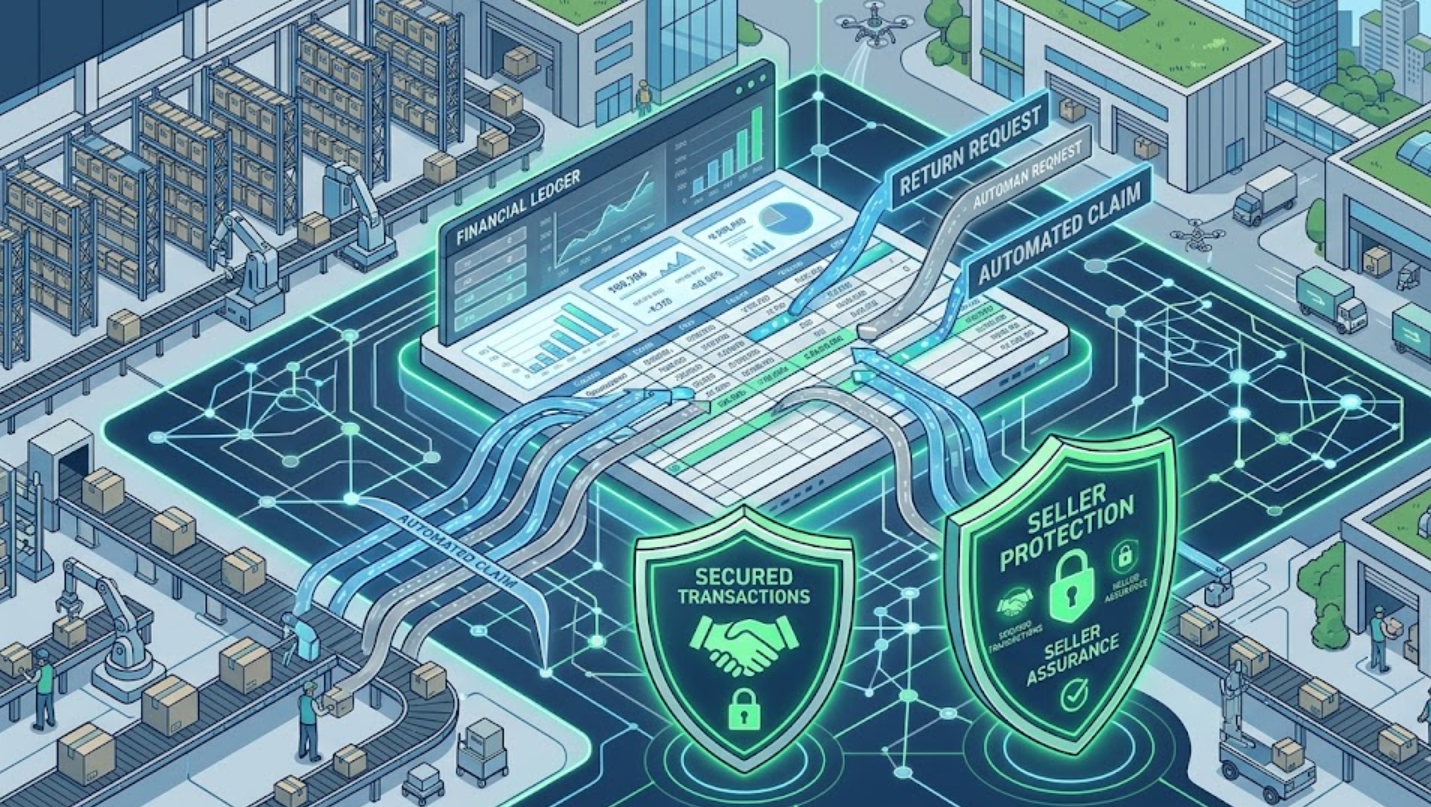
Navigating Amazon's A-to-Z Guarantee: Mitigating Seller-Funded Return Abuse
Amazon's automated A-to-Z Guarantee claims and escalating return abuse present a critical financial challenge for e-commerce sellers, often leading to uninvestigated, seller-funded losses. This trend, exacerbated by strict enforcement of doctrines like the First Sale Rule, necessitates proactive strategies to protect seller profitability. Understanding these dynamics and implementing robust mitigation tactics is essential for sustainable online business operations.
2026-04-29


