

THE FALLACY OF SPEED IN LOGISTICS
There is a pervasive misconception in the logistics industry that speed is the primary indicator of performance. Companies pay premiums for expedited shipping, assuming that faster transit times equate to higher efficiency. We argue that this view is fundamentally flawed. Speed without consistency is merely a faster path to a bottleneck.
When we analyze supply chain performance, we isolate the standard deviation of transit times. A shipment that arrives in 12 days one month and 28 days the next creates a planning nightmare. This unpredictability forces inventory managers to pad their orders, resulting in bloated stock levels. We prioritize the reduction of this variance. By stabilizing the flow of goods, we allow downstream operations to plan with certainty, effectively decoupling the supply chain from external chaos.
QUANTIFYING THE COST OF VARIANCE
The financial impact of logistic volatility is measurable. We utilize a proprietary calculation to determine the "Cost of Variance." This metric aggregates the capital tied up in safety stock, the cost of expedited freight to cover stockouts, and the opportunity cost of lost sales due to unavailability.
For many high-volume importers, the Cost of Variance often exceeds the total freight spend. Yet, it remains invisible on standard profit and loss statements. We bring this hidden cost to the surface. By applying strict statistical controls to carrier selection and route planning, we systematically reduce the need for safety stock. The result is a leaner, more capital-efficient operation where every unit of inventory is active, not static.
THE ALGORITHMIC SOLUTION
Transitioning from reactive shipping to predictive allocation requires a fundamental shift in methodology. We do not simply book freight; we engineer a transit algorithm.
Our approach involves mapping every potential failure point in the logistics chain. We analyze data on port throughput, customs clearance times, and carrier reliability scores. This data feeds into our decision-making matrix, which selects routes based on the highest probability of on-time arrival, rather than the lowest theoretical transit time.
This is the essence of "The Calculated Path." It is a route generated by logic, backed by data, and verified by performance. It eliminates the guesswork inherent in traditional freight forwarding.
VERIFICATION AND ROI
The final step in our methodology is the verification of financial impact. We do not rely on qualitative feedback; we rely on quantitative ROI.
We track the reduction in "Days Sales of Inventory" (DSI) and the improvement in "Cash-to-Cash Cycle Time." These are the true indicators of supply chain health. When variance decreases, DSI drops, and cash flow improves.
By implementing these structural changes, we have observed that clients can reduce total logistics spend even while paying slightly higher rates for premium, reliable carriers. The savings generated from reduced inventory holding costs far outweigh the incremental freight costs. This is the power of a data-driven strategy.
Optimize your ROI with LMLC's The Calculated Path at www.logicmilelc.com.
-

Navigating Amazon's Account Level Reserve (ALR) and Cash Flow Throttling: A Guide for Sellers
Amazon's Account Level Reserve (ALR) and "Delivery Date + 7 days" (DD+7) disbursement policies are severely impacting seller cash flow, making it challenging to pay suppliers and restock inventory. Understanding these mechanisms is crucial for maintaining financial stability and operational efficiency in e-commerce. Strategic logistics and proactive financial planning can help mitigate these significant funding delays.
2026-05-06
-
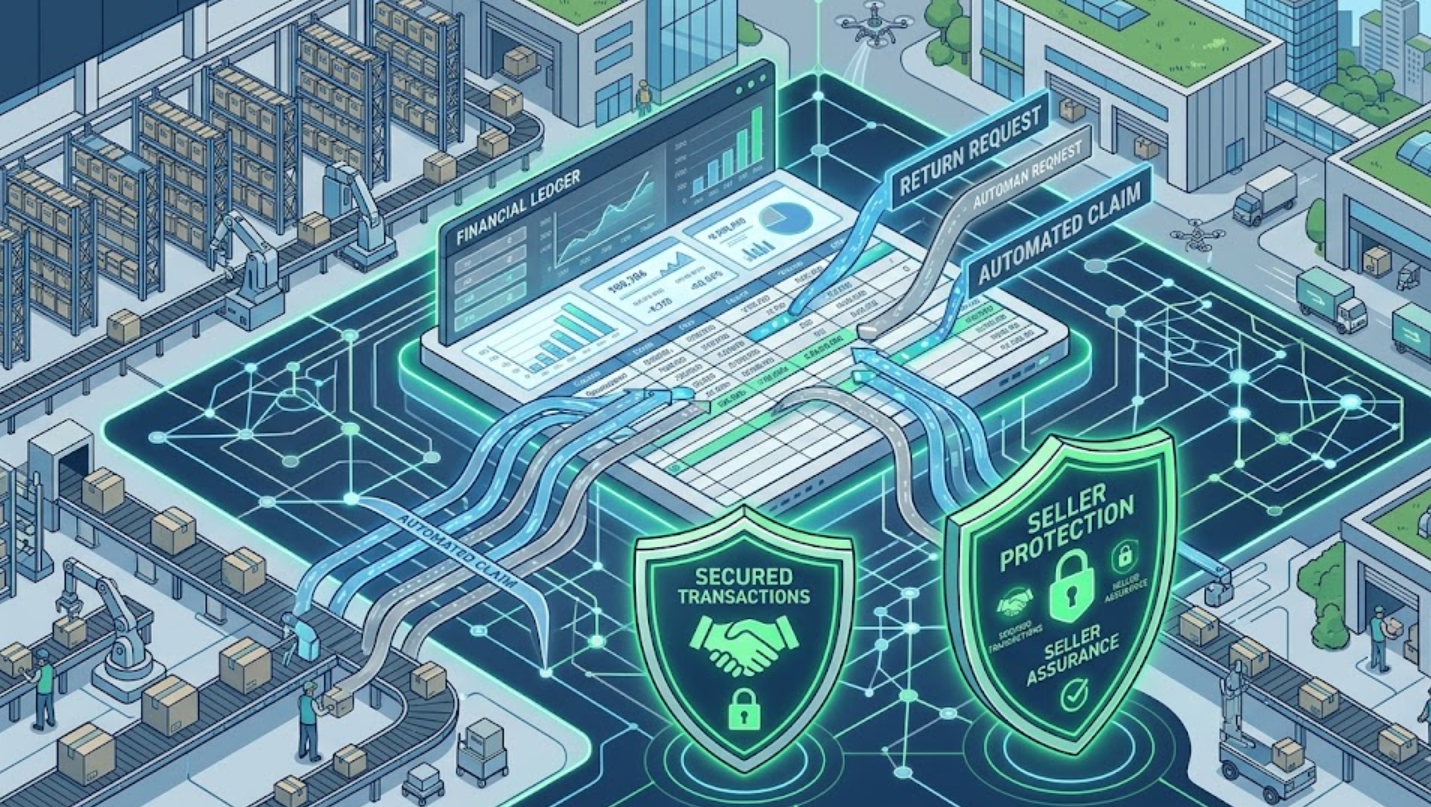
Navigating Amazon's A-to-Z Guarantee: Mitigating Seller-Funded Return Abuse
Amazon's automated A-to-Z Guarantee claims and escalating return abuse present a critical financial challenge for e-commerce sellers, often leading to uninvestigated, seller-funded losses. This trend, exacerbated by strict enforcement of doctrines like the First Sale Rule, necessitates proactive strategies to protect seller profitability. Understanding these dynamics and implementing robust mitigation tactics is essential for sustainable online business operations.
2026-04-29


