

THE FALLACY OF AVERAGES
When we audit supply chains, the first metric stakeholders present is almost always average transit time. While this number provides a baseline, it is functionally useless for inventory planning. An average of 30 days could mean every shipment arrives on day 30, or it could mean half arrive on day 10 and half on day 50.
For a logistics manager, these two scenarios represent entirely different financial realities. In the high-variance scenario, the business is forced to hold massive amounts of safety stock to cover the late arrivals, while simultaneously paying storage fees for the early arrivals. We define this as the "Variance Trap." It creates a bloat in working capital that no amount of spot-rate negotiation can offset.
THE MATHEMATICS OF SAFETY STOCK
Safety stock is essentially an insurance policy against uncertainty. The cost of this insurance is directly proportional to the standard deviation of your lead times. We apply a rigorous statistical lens to this relationship.
If we can reduce the standard deviation of your transit times by 50%, even if the average transit time increases slightly, the requirement for safety stock drops precipitously. We have observed cases where shifting to a slower but more reliable carrier reduced total inventory holding costs by 18%. This is the essence of The Calculated Path: prioritizing the reliability of the flow over the theoretical speed of the vessel.
STRUCTURING THE ALGORITHM
To escape the Variance Trap, we must stop treating logistics as a service and start treating it as an algorithm. This involves a structural change in how carriers and routes are selected. Decisions should no longer be based on relationships or spot rates, but on performance data.
We advocate for a weighted scoring model that penalizes variance. By ingesting historical data on port dwell times, carrier roll-over rates, and customs clearance intervals, we assign a "reliability score" to every potential route. This data-driven selection process filters out the noise and leaves only the most statistically stable options.
VERIFICATION AND ROI
The final step in this transformation is continuous verification. A calculated path is not set in stone; it adapts. As global variables shift—labor strikes, fuel fluctuations, geopolitical tension—the algorithm must re-calculate.
We implement real-time variance monitoring. When a specific route's performance deviates from the acceptable margin of error, our model flags it for immediate review. This ensures that the supply chain remains a precise, high-performance instrument rather than a reactive cost center. By controlling the variables, we control the outcome.
-

Navigating Amazon's Account Level Reserve (ALR) and Cash Flow Throttling: A Guide for Sellers
Amazon's Account Level Reserve (ALR) and "Delivery Date + 7 days" (DD+7) disbursement policies are severely impacting seller cash flow, making it challenging to pay suppliers and restock inventory. Understanding these mechanisms is crucial for maintaining financial stability and operational efficiency in e-commerce. Strategic logistics and proactive financial planning can help mitigate these significant funding delays.
2026-05-06
-
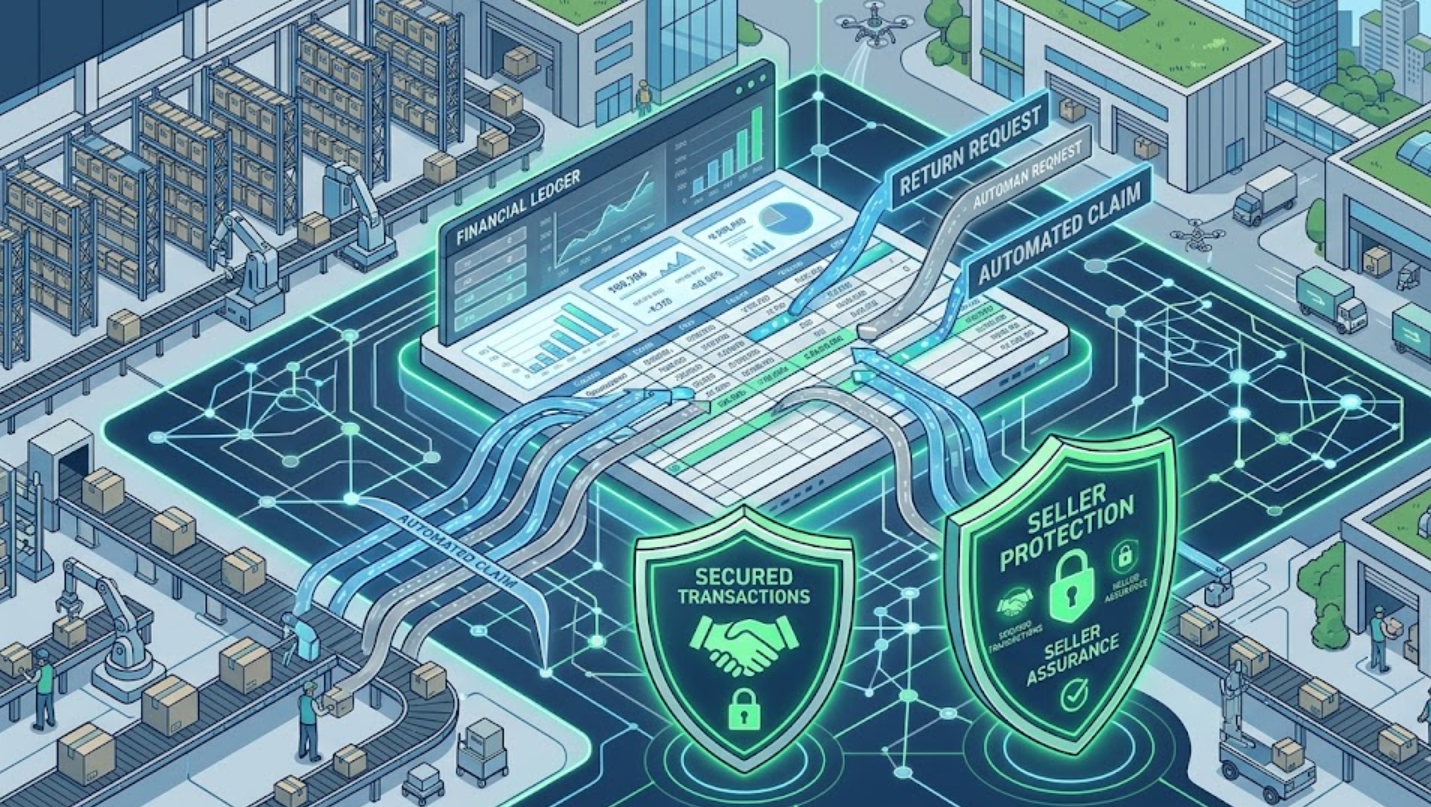
Navigating Amazon's A-to-Z Guarantee: Mitigating Seller-Funded Return Abuse
Amazon's automated A-to-Z Guarantee claims and escalating return abuse present a critical financial challenge for e-commerce sellers, often leading to uninvestigated, seller-funded losses. This trend, exacerbated by strict enforcement of doctrines like the First Sale Rule, necessitates proactive strategies to protect seller profitability. Understanding these dynamics and implementing robust mitigation tactics is essential for sustainable online business operations.
2026-04-29


