

The start of 2026 presents a confluence of major strategic challenges and operational resets across global logistics and e-commerce. From judicial decisions that could reshape trade to carrier pricing volatility and significant new compliance hurdles, successful supply chain orchestration now demands heightened agility and rigorous adherence to evolving regulatory frameworks.
1. Judicial Logjam: US Supreme Court Delays Trump Tariff Decision
The widely anticipated ruling by the U.S. Supreme Court on the legality of the Trump administration's sweeping global tariffs has been deferred. Initially slated for an opinion on January 9th, the Court passed on the opportunity, extending what analysts have termed a period of "cautious paralysis" across the financial and import sectors.
• Prolonged Uncertainty: The delay prolongs legal uncertainty for thousands of American importers whose multi-billion dollar supply chain decisions and corporate pricing strategies remain frozen pending the outcome.
• Key Trade Policy Test: The case tests the limits of executive authority under the International Emergency Economic Powers Act (IEEPA).
• Next Deadline: Industry focus now shifts to the next likely decision date, expected to be Wednesday, January 14, or a subsequent opinion day. Should the Court rule against the administration, officials have signaled a "Plan B" pivot, ready to reimpose duties under alternative authorities like Section 232 or Section 301, suggesting that tariffs, in some form, are likely to remain a fixture of U.S. trade policy.
2. Ocean Freight Dynamics: GRIs Face Market 'Discount' Despite Index Stability
The Shanghai Containerized Freight Index (SCFI), released on January 9th, recorded a marginal decline of 0.54%, settling at 1647.39 points, concluding a three-week upward trajectory. Critically, the market data reveals that carriers' planned General Rate Increases (GRIs) for the New Year have been heavily diluted by current supply-demand dynamics.
• Planned vs. Actual Increases: Initial carrier plans targeted substantial increases, such as approximately $900 per 40ft container (FEU) on Trans-Pacific (US West/East Coast) lanes starting January 1st.
• GRI Failure: The actual realized gains were significantly lower, a "major discount" on announced tariffs. For example, US West Coast rates only saw an increase of $30, and the US East Coast rose only $95.
• Underlying Headwinds: This inability to sustain ambitious GRIs suggests a market grappling with persistent overcapacity risks, despite rising index values on some trades earlier in the month due to pre-Lunar New Year activity and pricing policies. The performance on major headhaul routes was reportedly constrained by the "drag" from weaker South American and Southeast Asian main lines.
3. Amazon’s E-commerce Policy Reset: Compliance and Returns
E-commerce sellers face two massive operational shifts from Amazon’s updated policies, both emphasizing rigorous compliance and streamlined customer experience.
A. APRL Mandate for All High-Value Items (Effective Feb 8, 2026)
Amazon is eliminating the high-value item exemption from its Amazon Prepaid Return Label (APRL) program.
• Universal Requirement: Effective February 8, 2026, all U.S. FBM (Fulfilled by Merchant) sellers must use APRL for customer returns, regardless of product value.
• Streamlined Refunds: This move aims to standardize the customer return experience and reduce the refund cycle time from the current 14 days down to a more consistent 7 days.
• Mitigation: Sellers retain the right to file claims through the Seller Assurance for E-commerce Transactions (SAFE-T) program for reimbursement when they believe a refund was issued in error or not due to their fault.
B. Three-Category Compliance Overhaul: TIC Verification
Amazon has introduced stringent compliance policies for three critical product categories: Portable Power Stations, Water Supply Products, and Dietary Supplements.
• Mandatory Third-Party TIC: Sellers of these products must now collaborate with approved third-party Testing, Inspection, and Certification (TIC) service providers to submit compliance documentation. Direct seller submission is no longer accepted.
• Delisting Deadlines: Non-compliant products face mandatory delisting: Portable Power (EU-site) by March 15, 2026; Water Supply (US-site) by February 16, 2026; and Dietary Supplements (US-site) by March 10, 2026.
• Quality Assurance: This mandate, which requires documentation like ISO/IEC 17025 accredited laboratory test results and current GMP (Good Manufacturing Practice) certification, is a decisive step to enhance product safety and quality assurance on the platform.
LMLC advises all stakeholders to immediately audit their trade exposure, forecast shipping expenditures based on fluctuating spot rates, and prioritize compliance verification through accredited TIC services to mitigate imminent delisting risks.
-

Navigating Amazon's Account Level Reserve (ALR) and Cash Flow Throttling: A Guide for Sellers
Amazon's Account Level Reserve (ALR) and "Delivery Date + 7 days" (DD+7) disbursement policies are severely impacting seller cash flow, making it challenging to pay suppliers and restock inventory. Understanding these mechanisms is crucial for maintaining financial stability and operational efficiency in e-commerce. Strategic logistics and proactive financial planning can help mitigate these significant funding delays.
2026-05-06
-
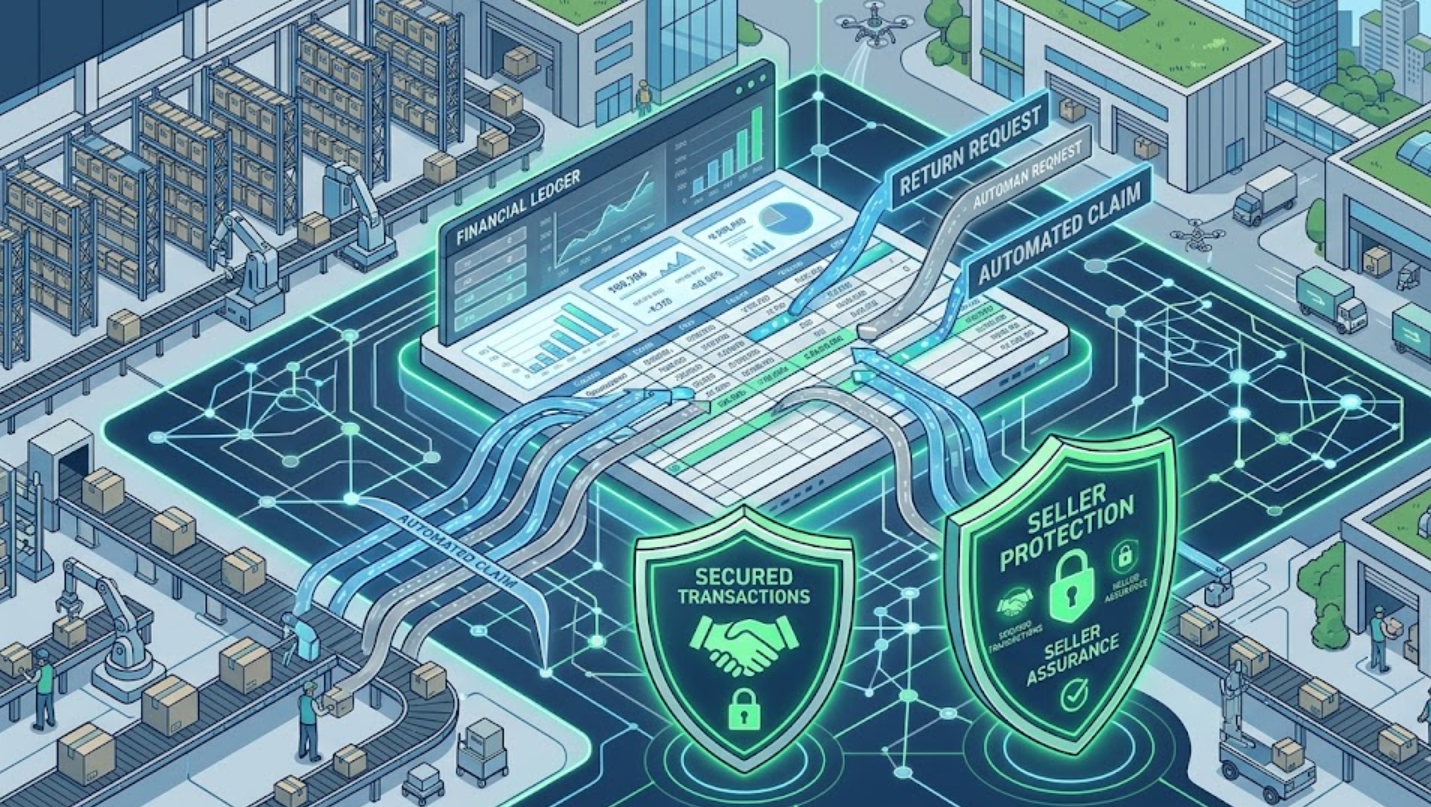
Navigating Amazon's A-to-Z Guarantee: Mitigating Seller-Funded Return Abuse
Amazon's automated A-to-Z Guarantee claims and escalating return abuse present a critical financial challenge for e-commerce sellers, often leading to uninvestigated, seller-funded losses. This trend, exacerbated by strict enforcement of doctrines like the First Sale Rule, necessitates proactive strategies to protect seller profitability. Understanding these dynamics and implementing robust mitigation tactics is essential for sustainable online business operations.
2026-04-29


